
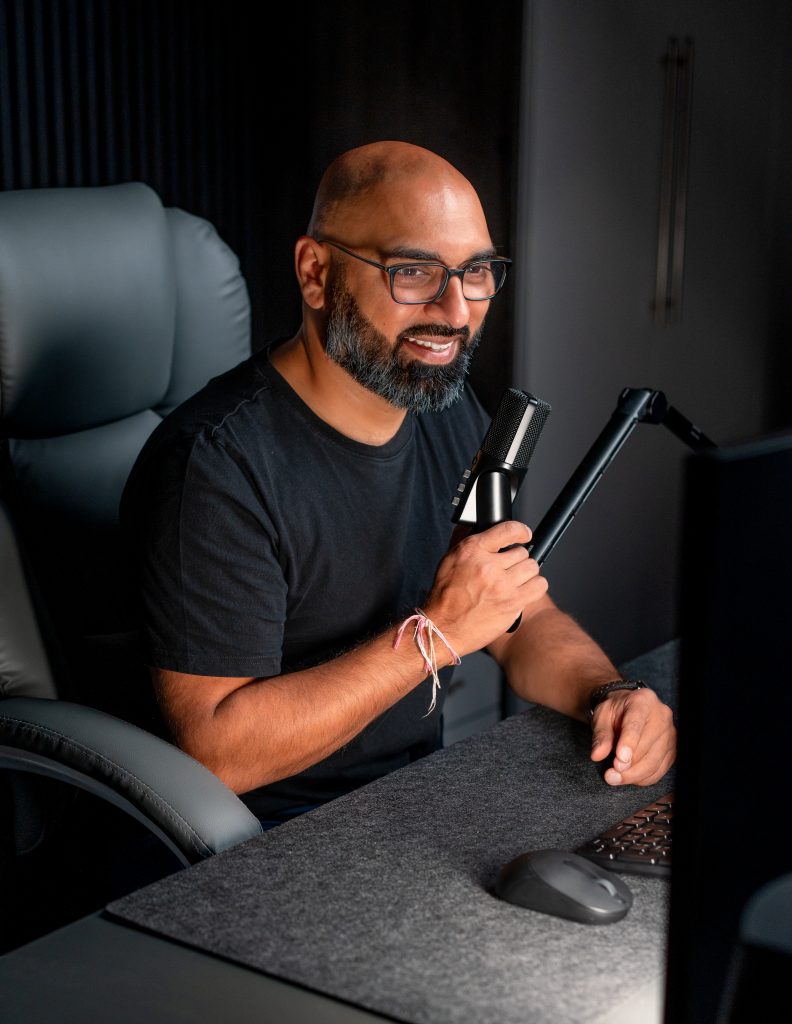
Build a Powerful Remote Workforce with Amish Sanghrajka
Playback failed. Open the audio file instead.
About this episode
Are you sure your remote team is working at full capacity? If you’re a business owner, it’s natural to worry about productivity when your team is out of sight. You want to trust your staff, but how can you be certain they’re not just watching TV whilst you’re paying them?
In this first-ever episode of The Cyber CEO Podcast, host Haree is joined by Amish, a COO who has mastered building high-performing, tech-enabled teams. They tackle the big questions head-on: from using measurable KPIs to track performance without micromanaging, to investing in the right tools that actually boost efficiency. Discover how to build a strong, inclusive company culture that bridges the gap between the office and home, and the crucial cybersecurity measures you can’t afford to ignore.
Stop worrying and start building a resilient, productive remote workforce. Listen now for practical steps you can implement today.
Transcript
Read along, or jump to any time
Haree Are you sure your remote team is really working at full capacity. Are you still relying on outdated tools and weak strategies? You might be setting yourself up for failure. Let's talk about why your remote workforce could be falling apart and how to fix it. Hello everyone, and welcome to the very first episode of the cyber CEO podcast. I'm your host, Harry. And today I'm joined by Amish, the COO of iceConnect and a seasoned expert in building tech enabled teams. Together, we're diving into a topic that's become absolutely essential in today's business world.
Haree How to build and manage a remote workforce using the latest technology. Whether you're already running a remote team or you're just considering the shift, this episode is packed with practical tips and insights to help you do it right. Amish, thanks for joining me today.
Amish Good to be here.
Haree Thought we would start by talking about why we need a remote workforce. I mean, we've used it and it's working brilliantly for us, isn't it?
Amish Yeah, The biggest thing for us is increasing the pool of potential candidates for roles. You get so much more skill that you have available if you expand where you're looking for work. And you go global it just gives you that much more.
Haree Yeah, I mean, right now we're working out of South Africa, but it's not unbeknown to people that you can always go online to find people to do jobs for you around the world, right? You've had things like Upwork and Fiverr for a long time, and that's mainly for us European pool of Candidates from what I see in the tech world, anyway, South Africa was never our first point of call, was it? We exploited a few other options in the, in the making.
Amish One thing that we learnt from that was, you, you can sometimes get cheaper work in certain areas, but the problem with that is, especially for us, was time zones. And if you want people to be able to work UK hours, but they're across the other side of the world, it makes it very difficult for them, and they don't end up hanging around for too long.
Haree That's true. We tried Philippines and what was it? An eight hour time difference.
Amish something like that,
Haree Didn't work out too well. I mean, it's okay if you're young but as soon as you get older, start family and stuff like that, you don't want to be working antisocial hours. You don't want to want to be working. Up to midnight every day just to be on our time zone. And although the candidates were good and we had a good workforce there, retaining them for a long period of time proved to be a challenge, right?
Amish Yeah, and for something like the industry that we're in, you want people to hang around for quite a while. You don't want to be chopping and changing too frequently. Certain industries, it's not so much of an issue. But with us, I think we want people to stay around for a little while.
Haree Exactly. Especially with the time and money it takes to invest into building the team and educating them and training them, right? It's especially in our industry. It's not very easy to do. We spend a lot of time on training and coaching and certification. If they're only here for a couple of years, it, it impacts us a lot. And that's more time aside to train someone else to come in as well. Right. If they are having to speak to customers and work to your time zone and they can't work in the evenings, that's an important thing to consider where they're based for us. South Africa works well, right? It's
Amish It's only an
Haree an hour's difference.
Amish on the time of year.
Haree Yeah, so that works well for us and I think they like it as well when they get to start an hour early an hour later
Amish there.
Haree exactly The other thing with south africa if I have to mention is the language barrier is a lot less compared to For example philippines or india which we also looked at it was Much easier to train and coach because there's They all speak English out there. And they were very well educated as well, hardworking good ethos. So I think so far South Africa has been very good for us
Amish Definitely.
Haree to bring it to tech a little bit, would you say that we based some of this decision, a small portion, if any On the availability of Microsoft data centers. I say that from a security standpoint in that we had Microsoft as you were in South Africa, which meant that we could get people working on their virtual workstations a lot latency, latency being the time delay between sending data from one site to another was a lot shorter from South Africa. Would you say?
Amish Definitely. So the speed that they're able to work at because their VMs, their virtual machines are based in South Africa, it's a lot quicker than if, for example, they were connecting into a machine that's based in the UK because the, the time it takes for that data to travel from there and back obviously impacts how fast their mouse movements are, their typing is.
Haree Give me a quick rundown. Why do we have these virtual machines set up for these guys, especially for the listeners who aren't in the tech world, as opposed to them just using the laptops we've given them to connect directly to our systems?
Amish So there's two aspects to this. One is initially we didn't. Really give out company laptops, people were using their own devices and from a security standpoint, that was something that we weren't comfortable with letting them access data and how's data on their personal devices. so we started off with the virtual machines, but then the other benefit of that is. If there is a theft of a device or anything like that, then the data is not housed locally on that device. So even if someone breaks into it, they don't get access to anything that is critical. All of that critical information is stored on a device that's housed on a platform that we manage.
Haree And just to be clear, right now we're using Azure virtual desktops, right? Or Windows virtual
Amish We're using Microsoft 365 virtual infrastructure.
Haree So to cover some security points, we've got Microsoft 365 where they connect to from their house. So it doesn't really matter what machine they're connecting from. What other security precautions should we be taking when people are working remotely?
Amish so the big ones are the obvious ones, which is antivirus um, malware and the standard security packages that you would put on devices. should really be even on the local device because if they are doing something locally and they upload a file or anything like that, you still want it protected.
Haree The local devices, obviously the laptop they're using to connect. Yeah.
Amish I would say antivirus products are obviously a massive thing. The other side of it is also restricting what they can access from where. So certain, certain platforms that you have may be restricted to only being able to be accessed from your office, for example. Not from everywhere. Yeah.
Haree Yeah. And, and how would you do that? I know we use VPNs, for example, and that means people can't get in unless they've got a VPN. It keeps our thing completely tight and secure and we can define who accesses it and where they access it from specifically which devices they couldn't, for example, take their machine on holiday with them and then start accessing the network again without us knowing or, or have their device stolen. Right? So I think VPN is a very important thing there.
Amish VPN definitely is one of the key things that we do use to restrict um, the ability to access things. They VPN into our office network and then everything they access is essentially from our office.
Haree We'll have plenty more episodes just focusing on cyber security. So if we were to identify, let's just say two or three things, everyone should look out for it's try and create a virtual environment so that we know and control the devices they're accessing. And that can be pretty much switched off overnight if we need to, we're not depending on them to return any devices or laptops for that security to happen. a secure connection back to Head office if they need to access anything locally such as a vpn I do love microsoft 365 in this scenario and it comes with its own security Which you can implement and again a topic for another day in in more depth, but things like restricting access from different countries things like Multi factor authentication.
Haree So, you know, people can't impersonate you if your devices are stolen. That all helps with building the security on
Amish Yeah, yeah, it definitely does. And the other one uh, a big one of that being a service called Intune, which essentially allows you to control the devices that are being managed by your company and you can remotely wipe them if need be, you can see where they're accessing it from and it has to be a device which has been enrolled onto your platform by one of your administrators them to access any company data.
Haree Yeah, perfect. So I would strongly recommend that. And that, that Intune comes with the Microsoft 365 premium license, if I'm not mistaken, right? Yeah. So you have to be on a premium license for that. Let's move on to. Talking about building company culture. And this was most probably where you have worked really hard, or we as a company have worked tirelessly to try and build company culture. It was very easy when everyone was in the office. Um, your shoulder to shoulder, you can have conversations on the side, walk down the road for a few drinks after work. Tell me the challenges we're facing with remote working.
Amish The biggest challenge we had was getting everyone to have an open channel of communication so that the person working on their own at home didn't feel isolated. Um, and trying to shift everyone away from just having the conversations in the office to actually typing them out on a communications platform where you Slack, for example. It took a bit of time and it took a bit of reminding every now and then for people to start doing it But once we expanded the team, especially and people realized that they have to start using the chat It it's become great. We Have we still have the banter that we had in the office. We just do it on slack.
Haree Yeah. I think it's a lot easier as well. With messaging apps because if someone's shouting something out at you, it's almost like you have to do it straight away,
Amish Yeah
Haree Where if you've got a message come through on slack or on teams? I know it's sitting there, I'll get to it once I've finished what I'm working on, right? Which makes it a lot easier. The only downside, and I, I, I know this is very common for a lot of companies, things can get miscommunicated on channels such as Slack and Teams, right? So, there has to be a little bit of understanding, a little bit of give from everyone who's using these platforms. You know, people's mindsets are different. People's thought patterns are different. People's cultures are different in their own countries. They might not get a joke, which you're saying and vice versa. And, you know, British are known to be quite sarky at the best of times. And a lot of people abroad don't understand that level of sarcasm as well. So,
Amish So this is something that we've, this. is something that we've kept reminding people and we do reiterate quite, frequently actually, is that people. may misunderstand your tone and it's also very hard to portray your tone when you're just typing a message so the two things are when you're typing something be careful what you're sending just read it again before you send it make sure it's not a bit too brash or insulting then if you're receiving a message the other side of it is don't read into it too much if you are in any doubt of what it means just call the person and find out
Haree I think. That's the other big point you've jumped on there, is although we try to simplify our life with things like Slack and Teams, there's no harm in still picking up the phone to people, there's no harm in talking to them or even jumping on a video call. It's so easy within these platforms to do. You could just say, oh look, I'm going to video you in five minutes or something. Just face to face communication is still there. You don't have to be physically present. And I think that's very, very important and it helps cultural it helps build that culture. One thing I think we do very well, and it's something we started quite a while ago is at least once a month, the whole team jumps on to our calls video calls, one person alternating every sessions, and it can be absolutely anyone picked at random, Present something of interest to the team, whether it's work related or personal, it doesn't
Haree have to be work related. But you get to know that person, you get to build a personality for that person
Amish random stuff like, we've had stuff on crypto being, um, like, taught on these. Uh, is completely not work related, but it's great, fun to learn about.
Haree So it's important to have this, right? So everyone can see each other's faces, especially people working in different teams. They don't have to always be on the same team. Works out very well when you rarely speak to someone, but now you can put a face to the name. You know what they're about. You know what kind of personality that they have. So that's important. And again, that comes along with the tools we're working with. Right? So we mentioned Slack and Teams, for example. I would say virtual desktops are good tools to use for remote teams. You kind of need to be on Microsoft 365 now if you're using a remote team as well. And these piece together, form a really good remote work setup and, and very secure from our perspective. So I think making sure you've got the right tools in place for people to be able to communicate, for people to do their job quickly and easily and collaborate.
Haree Collaboration is really important with remote teams, right?
Amish Collaboration is, a massive thing. The other side of this is also tools that allow you to implement processes. Things like that are really important as well. So within Slack, for example, you can have automations where people just start a, like, click a button and it will get them to fill out a form and that starts a process of whatever you want it to do. then. An example for us is if we need to order a license on Microsoft 365, there's a few people that are allowed to actually place that order because it involves costs and all of that. We have a process where one of the junior staff can just trigger a form, fill it out saying this, the customer, this is the license that's required.
Amish They submit it, it tags the people who can order the licenses. And then the license gets ordered, the person who's ordered it clicks a button, it says completed, it notifies the original technician that it's been done.
Haree So these are built in workflows on Slack as well. Right. Here's what you're talking about. And I presume you can do something similar on teams
Amish Yeah, you can.
Haree Yeah. So one important thing, and I think I know I had this concern very early on partly still do, and I know a lot of business owners out there who are. Trying to build a remote team or already have a remote team. They're worried about performance. They're worried about people sitting at home. You know, they've got two feet up on the desk, watching TV on one side and pretending to do work on the other side.
Amish just
Haree that's not really the case, right? And I think we're always thinking about the worst case scenario. We're always, from a business owner's perspective, to put it bluntly, we're looking for bang for buck. We're looking to think. We're spending X amount on this person's salary. We don't want them sitting at home, watching TV whilst we're paying them to work. Talk me through what processes you've implemented for our team to ensure that doesn't happen.
Amish The biggest thing is still communication. When you see messages going back and forth between people. You can see that they are actively working. But in terms of the actual processes, I think the biggest thing that any company can do to track remote working is introduced. Strong, solid KPIs, things that are measurable, and you tell each member of the team that this is what's expected of you. And as long as they're delivering on those KPIs, it doesn't matter. Sort of whether they're only working for six of the eight hours that they're Contracted to work for four of the eight hours if they're meeting those KPIs those targets then ultimately they're Delivering on what they are being paid to do
Haree Oh, I think you and I might disagree on this one. I'm actually, if they're only working four of those hours of the eight, they're getting paid to work. That means we're not giving them enough.
Amish this is where setting the, setting those KPIs, setting those deliverables is very important and reviewing them. So if you find that they are only working four hours consistently, that means that yes, they might have too little to do so you increase what they're expected to deliver on.
Haree I think we've also got, for example On Slack, the communication response times, for example, we know how quick someone responds, we've got statuses to say, you know, we're out for lunch or something, or we're not at our desk. And, you know, there's a messaging system in there to say back in an hour or something like that. So although we don't have to be very rigid about the rules, there are ways to communicate what, where people are and what they're doing at
Amish Yeah. And.
Haree being too intrusive, right?
Amish And as a worst case scenario, if they aren't delivering on their KPIs, but they are working from home or working remotely, there are lots of tools that you can use and that a lot of big industries do use things like, as an example, ActiveTrack, there's other platforms out there that are similar where you can, track what the person is doing. You can see screenshots of what they're doing and things like that. can track their active time as well. That for me, there's a trust issue there where you don't want to implement that in my view right from the get go. I feel like that is a last ditch thing if someone's not delivering.
Haree I think it's also it is intrusive on someone's
Amish Yeah.
Haree work, right? If you're having to do that and you kind of had to have got down the line quite a bit to say we are at the point of installing monitoring software on your machine, I think what is a good policy to have is a work from home policy, which clearly identifies what people are allowed to do, what they're not allowed to do. If work from home actually means work from home, or if it means work from anywhere outside the office, i. e. you could take your family on holiday and between the hours of nine and five, as long as you're working, it doesn't matter where from some companies have that and allow that. So it's very important you do that. And then the procedures which are involved, if the company feels you're not working very well, just to give you an example of some of the KPIs. We implement, we've got, for example, on our L ones these are our junior engineers.
Haree We monitor how many calls they answer, how long they're spending on calls, how many tickets they're dealing with how many tickets they're closing. All of this gives us an idea of how much work they're taking on and what we know that they're capable of handling as a general rule of thumb. And these translate into KPIs, which we then monitor and we can sit down. And I think the other thing which is important is. Sitting with the team or communicating with every remote person, perhaps once a quarter is what we kind of do at the moment, making sure we've caught up with them, how's it, how things going, what's going good, what's not going good kind of thing. So they know that we're still there for them and we kind of have to help handhold them and nurture them a little bit into the organization.
Haree A lot of people who are moving into this remote work, haven't done it before. They've all come from offices. It's all new for them, isn't it?
Amish one thing that I've started to do which you actually recommended was a monthly check ins. And this isn't just with remote stuff. This is with everyone. And it's just a check in to see how are things going? Is there anything that we need to change? And you find that this is where people are applying. Sometimes a bit scared to approach management with an issue, but if you go to them and specifically ask them, is there anything I can do to help you work better? And then you suddenly get input back where people are saying, Oh, my, my laptop is really slow. Would I be able to get a new one or things like that where they've not been able to work properly, but they've been too scared to bring it up.
Haree Hmm.
Amish Especially for remote stuff I've found with South Africa. Some of the staff there are, they're very hesitant to approach management for anything because they feel like they'll be looked at badly for complaining.
Haree That's news to me actually, but yeah, I don't really deal with the day to day. So, maybe not so much something someone would approach me with. Moving on to the future. There's a lot of stuff in the press about big banks cancelling remote working and come back to the office. Otherwise we're cancelling your contract and stuff like this. My opinion. Is remote working is here to stay, but more of a hybrid model And, and all the evidence proves it. I think there was a BBC news article in July, which basically turned around and said, the majority of companies are keeping remote working, but it's going to be more of a hybrid model.
Amish Yeah, I think on average, I just based on a few things that I've seen on average, people are expected to be in the office at least two to three days a week. Most companies are trying to enforce that. And it, I think. From from my perspective, it is a good model to have because it gives you the flexibility of working from home and sort of the the balance of work life on the two or three days that you're working from home. You can wake up late, you can get stuff done in the evenings, lunchtime, whatever. And the other side of it is You're in the office, you're meeting the team face to face, and I think that is still a very important aspect of the team, because if you don't meet people in real life, there seems to be a disconnect.
Amish So I think it's helpful to have the hybrid model.
Haree I mean, look, that obviously works for people who live within a reasonable travel distance from the office. There is this. Thought to say that if you want to go fully remote, and you're working for a UK company, and you want to stay in the UK, and you want a UK salary, I'm starting to think that's not totally feasible going forward. And the reason I say that is you've got all the other countries outside of UK and possibly even Europe at much cheaper salaries to do exactly the same job. Now, if you want to go fully remote, why is that organization you want to go fully remote with not going to employ outside of your UK, right? Almost half of the salary.
Haree So that's a very important thing to, to give you that competitive edge. You've got to be able to have the ability to go into the
Amish Yeah, definitely.
Haree and talk to people. But the other way we try and do this office environment or culture to the people who do permanently work remotely is for example, ours in South Africa, I think it works very well about Three four times a year we fly them all out to the same destination within south africa. Let them have a big old jolly on
Amish yeah
Haree um, you know, we pay for all the flights hotels food and drink whatever for a couple of days and I think that works very well that makes them feel part of a team.
Amish Yeah, definitely and I think the other thing is just regular video calls with team members We've got weekly meetings where everyone sits in on a video call and then just has a chat for half an hour Yeah, yeah,
Haree I I think the culture of Office environment is important, even if you are working remotely. I think that's very important, especially from a business owner's perspective. We want to see that happening. You know, they used to call it the water cooler chats where you can stand around it and, you know, you've both gone up to get a glass of water and there's a fresh new idea that's come out or let's work on this together, or I've got this problem and you kind of do lose a little bit of that. When it comes to having to communicate it over chat or over the phone, I, for one, still love face to face communication. I will settle for video calls, but I prefer in person. But yeah, there's a whole chain of thought around that. It's dependent on, I guess, what generation you're brought up in now,
Amish Yeah, I think
Haree The new generation is all,
Amish at the moment. It is very generational and more and more you're getting, especially the new generation coming into work have come in during COVID where it was fully remote. They've never been in an office before. And now you're telling them you have to come in and. They're sort of the whole anxiety and all of that is coming out and they're just like I don't know what this means I don't know how to do this And it's it's been an experience hiring people who haven't actually had to come into an office before They've worked remotely fully and now you're telling them actually we we operate on a hybrid model So you are gonna have to come in a few days a week Yeah,
Haree Dare I say it, some people we've had turn up, don't even know how to behave in an office. Because they've never had to really step into one. And then there are others who have always been in the office and they're like, I'm never coming back. I want to stay at home. I love the life. And there, look, there is a great idea that you can stay home and do the things you've saved yourself a couple of hours of travel and all of that as well, which you mentioned earlier. So I think that's a good idea. So look,
Amish on the sort of on the lack of commute, the one thing I found there is also, and I've noticed that with our team, is the people who are working on the days that they're working from home, there's quite a few occasions where they will stay on for an extra half an hour, an hour to finish things off. Whereas if they were in the office, they want to get out at as soon as they're finished for the day, because they know that they've got an hour to drive to get home. Whereas, If they're already at home they'll stay on for a little bit longer just to finish off whatever they were dealing with.
Haree For someone listening to this, who already has a remote team in place or looking to set up a remote team, let's go through a few action points for them to consider or what they need to look at. Look at the existing setup, identify areas of communication. Which may be lacking cyber security. I think that's a massive one. Have a look at how everyone's securely working remotely. Are they working off their devices? Company devices? What happens if that gets stolen and someone steals their identity and stuff? Can they get access to company resources? Big one on security. And I think another big one is the culture. What are you doing to improve your company culture, making people from the office, talk to your remote team and vice versa, and make sure there's constant communication and everyone feels part of the team as
Amish Yeah. You have to make everyone feel included. 'cause otherwise you're gonna lose people.
Haree Yeah. And, and I think the final one is the tools you use, right? So we, for example, absolutely live on Slack. And that is all of our messaging. That is our workflows. That is our now task lists. To some degree, we've got our video calls all happening in there. So that is a massive hub of the environment of our office culture as well
Amish Yeah. So one of, one of my big. Pieces of advice to anyone who is trying to get a good remote workforce is invest in the tools they may seem expensive for some of them, but a hundred percent, they will save you a lot of money in the long run by increasing efficiency, by fostering a good culture and just generally enabling your team to work better.
Haree Amish, thank you very much for joining me on today's podcast. Until the next one. See you soon.
Amish Yep. See ya.
Haree Today, Amish and I explored the ins and outs of building a tech enabled remote workforce. We discussed the tools you need, the cyber security measures to put in place, and how to maintain a strong company culture, even when your team is spread out. Remember, the key to successful remote teams lies in choosing the right technology to work with. Setting clear expectations and fostering a healthy work life balance. We hope you found some valuable insights today and you can apply to your own business. Until next time, stay innovative and keep pushing your business forward.